Signs and Symptoms of Hereditary ATTR Amyloidosis (V122I)
Introduction
Hereditary ATTR amyloidosis is a genetic condition that can affect different parts of the body. The V122I gene variant, which occurs more often in people with West African ancestry, is most commonly linked to heart disease known as ATTR cardiomyopathy.
Symptoms may develop slowly and can look different from person to person. Some people who carry the gene may develop symptoms, while others may never experience noticeable disease.
Learning the possible signs can help families recognize patterns in their family health history and start informed conversations with healthcare professionals.
What are the early signs and symptoms of hereditary ATTR amyloidosis?
Early signs and symptoms of hereditary ATTR (hATTR) amyloidosis can be subtle and may develop slowly over time. They often affect the nerves, heart, digestive system, and musculoskeletal system.
Possible early signs may include:
Numbness or tingling in the hands or feet
Bilateral carpal tunnel syndrome
Lumbar spinal stenosis or back issues
Tendon injuries, including distal biceps tendon rupture
Shortness of breath or reduced stamina
Swelling in the legs or feet
Irregular heartbeat
Digestive changes such as constipation, diarrhea, or feeling full quickly
Dizziness when standing
Unexplained fatigue or weight loss
Because these symptoms can appear unrelated or develop gradually, hereditary amyloidosis is often underrecognized or diagnosed later than expected.
This includes individuals with the V122I (Val122Ile) gene variant, which is more commonly seen in people of African descent and may increase the risk of developing ATTR amyloidosis.
Continue below to see how these symptoms show up in the body and what they may mean.
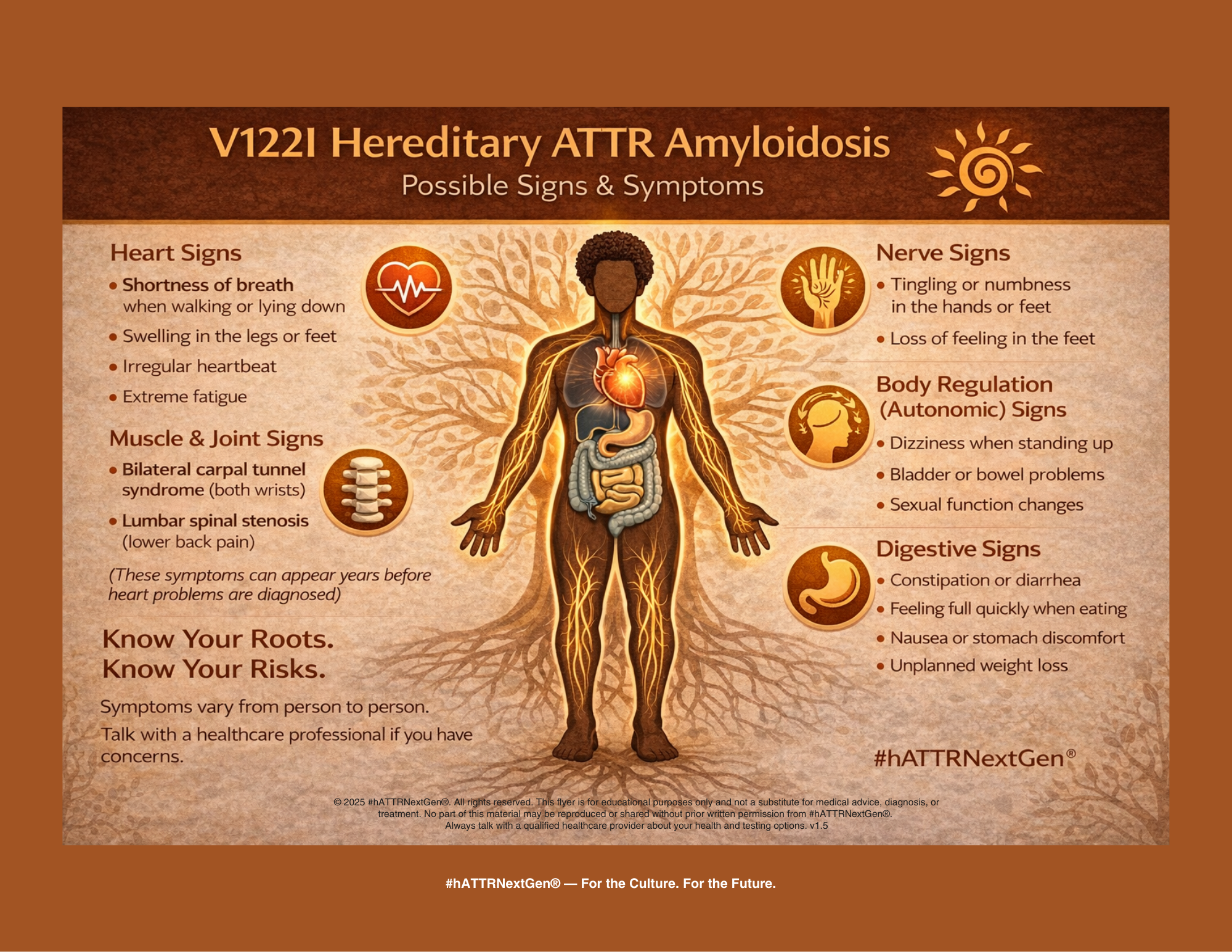
Signs and Symptoms Explained

Heart
Heart involvement is one of the most common features of V122I hereditary ATTR amyloidosis.
Possible signs may include:
• Shortness of breath
• Swelling in the legs or ankles
• Irregular heartbeat
• Extreme fatigue
These symptoms can sometimes be mistaken for other heart conditions.

Body Regulation Symptoms
Amyloidosis can sometimes affect the autonomic nervous system, which helps regulate body functions.
Possible symptoms include:
• Dizziness when standing
• Bladder or bowel problems
• Changes in sexual function

Nerve Symptoms
Some individuals may experience symptoms related to nerve involvement.
Possible signs include:
• Tingling or numbness in the hands or feet
• Loss of feeling in the feet
These symptoms may develop slowly and may overlap with other nerve conditions.

Muscle and Joint Symptoms
Certain musculoskeletal conditions may appear years before heart symptoms are diagnosed.
Possible signs include:
• Bilateral carpal tunnel syndrome
• Carpal tunnel symptoms that return after surgery
• Lumbar spinal stenosis
• Distal biceps tendon rupture
These conditions are common but may provide important clues when they occur together.

Digestive Symptoms
Some individuals may experience digestive changes.
Possible symptoms include:
• Constipation or diarrhea
• Feeling full quickly when eating
• Nausea
• Unplanned weight loss.
Symptoms Can Vary
Not everyone with the V122I gene variant develops symptoms. Even within the same family, symptoms and age of onset may look different.
Researchers are still working to understand why the condition affects individuals differently.
Final Call to Action
Know Your Roots. Know Your Risks.
If you recognize symptoms that raise concerns, consider speaking with a healthcare professional. Having one or even several of these symptoms does not automatically mean someone has hereditary ATTR amyloidosis. A healthcare provider can help evaluate what you are experiencing and rule out other possible causes.
You can also download this symptoms guide and explore additional educational tools in the #hATTRNextGen Resource Hub.